Ellavi Drape Components
Using The Ellavi DrapeÂ
Monitoring
Disposal
Comparison Chart
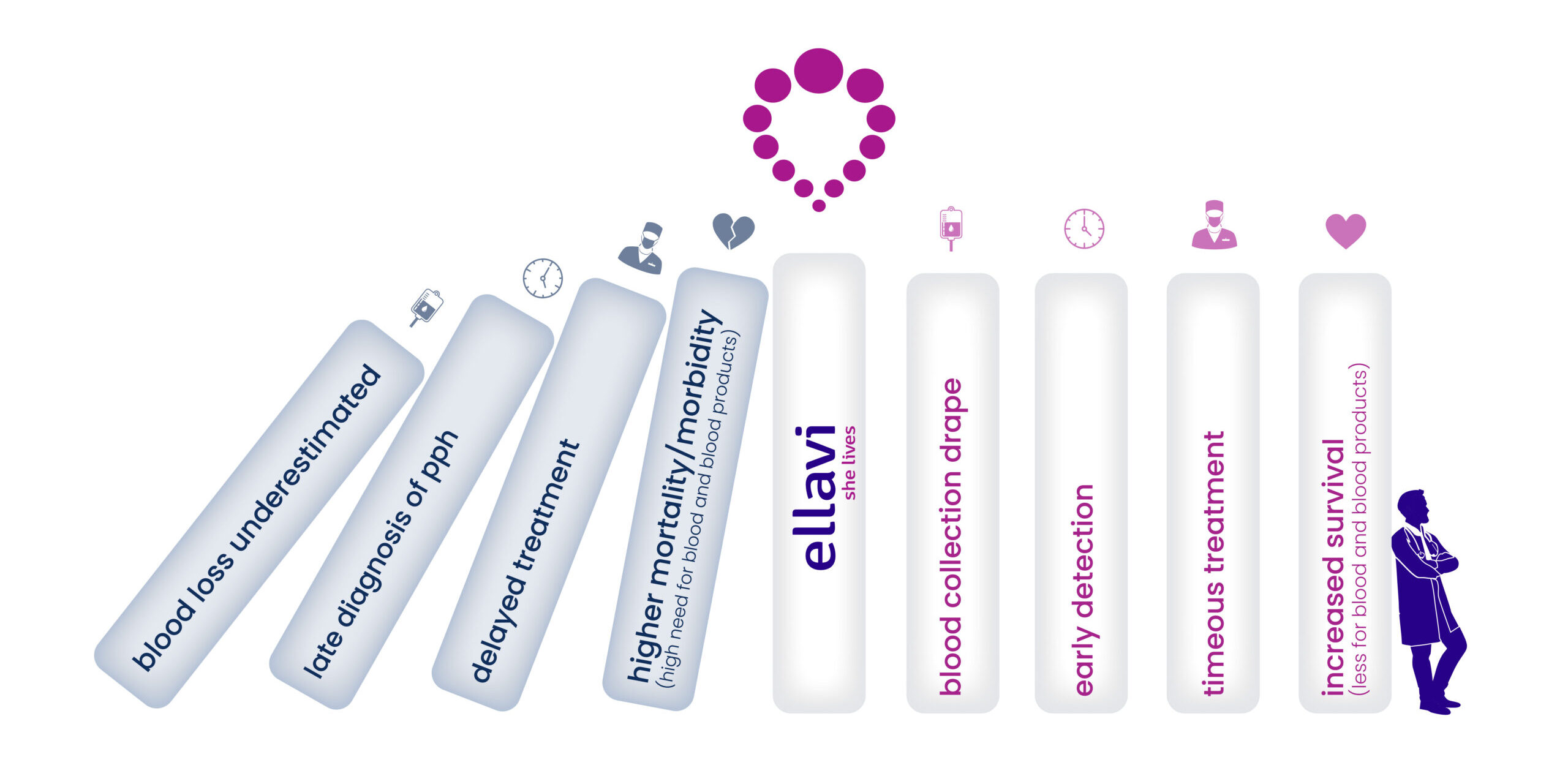
the answer to PPH detection
the problem with detecting pph
- visual estimation is biased
- pph is under diagnosed
- postpartum blood loss is underestimated by 30%
- accuracy decreases as blood loss increases
- this results in delayed treatment
the benefits of early detection of pph*
 The Ellavi drape makes early detection possible
Improved health outcomes – less mortality
39 % less blood products required
Timeous intervention stops bleeding sooner
60% decrease in severe PPH when using a drape
how it works
placement
Positioning the indicator line on the edge of the bed ensures correct drape placement. Blood flow is channelled towards the pouch by lifting the sides of the drape.
pouch position
Long straps allow the drape to be tied to the mother without hindering breastfeeding.
foot-end – tie beneath the mother’s breasts
bed side – tie diagonally across her abdomen
post c-section
The drape is placed on the recovery bed. Transfer the mother from the theatre bed onto the drape to monitor blood loss. A pillow is placed under her knees.
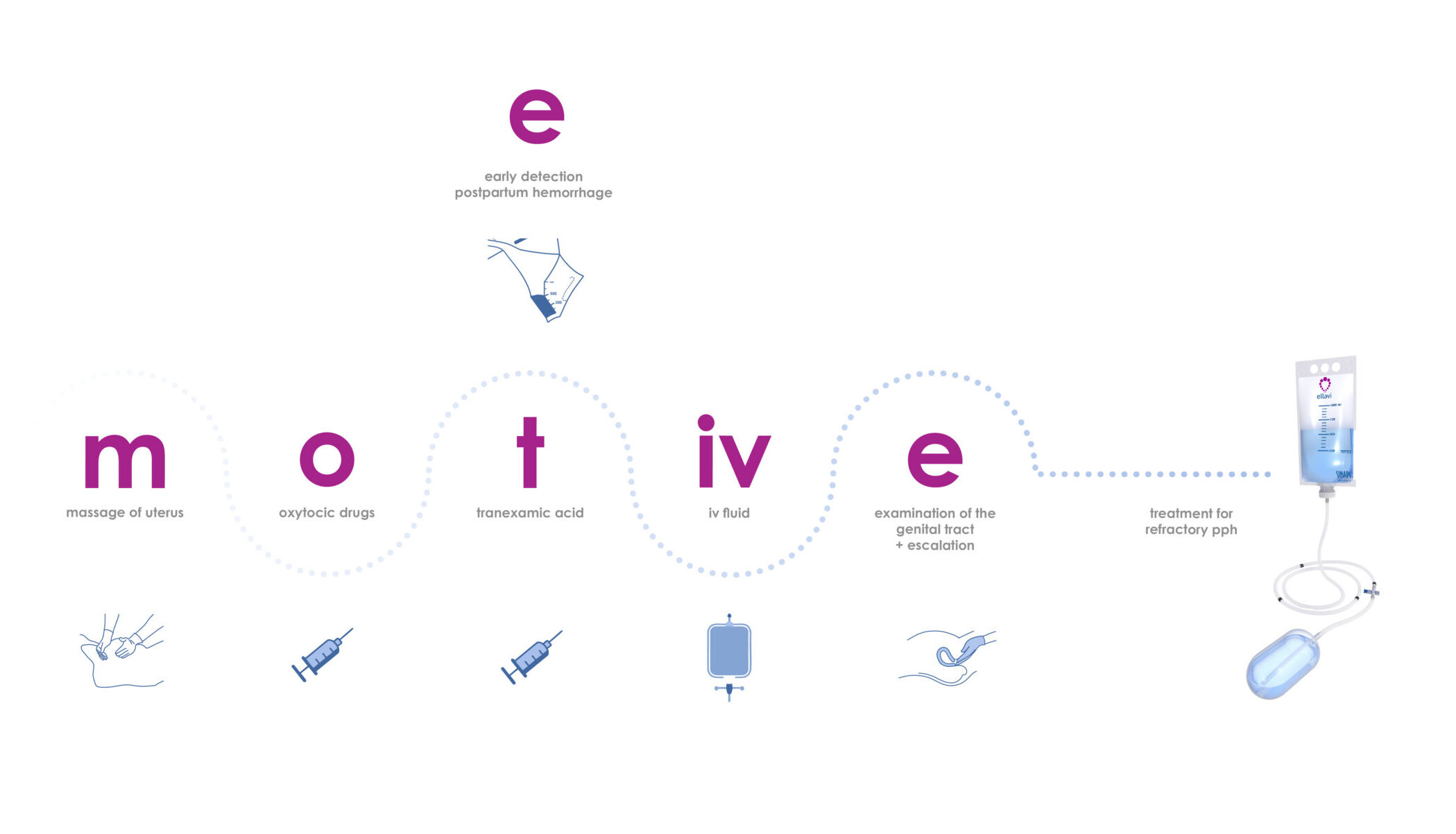
pph action trigger
Markings at: >500 ml blood loss or,
>300ml blood loss + one abnormal observation